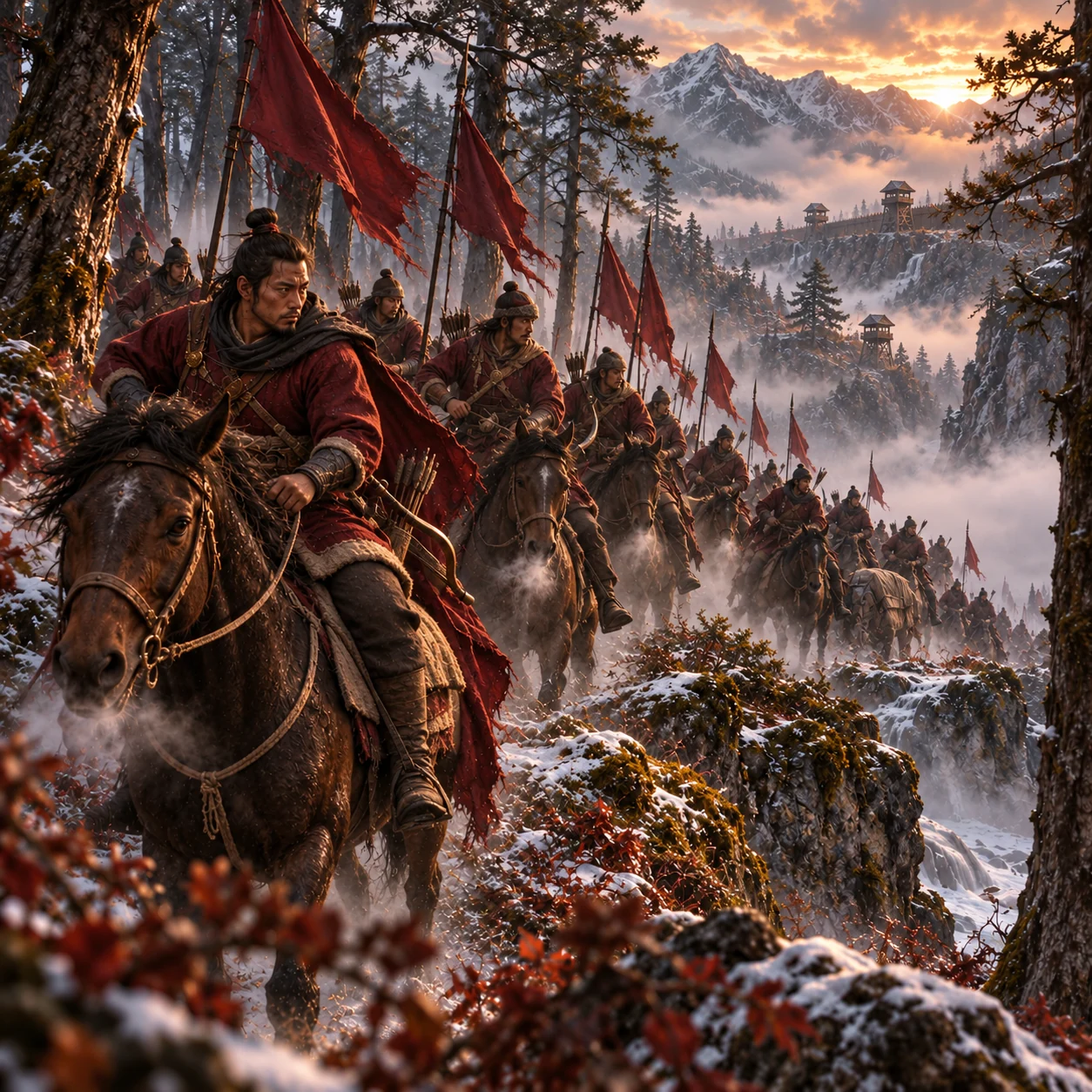
Illustrated soldiers moving through a mountain landscape
01 / Beyond the battles

戰國 · Zhànguó

Power was changing shape.

The competition between states was also a contest in organisation. Larger infantry forces and stronger administration changed the relationship between rulers and the people they mobilised.

Historical source ↗

The seven-state framework is a useful introduction, not a claim that only seven communities or political actors existed. Our cards narrow the focus further to Qin and Zhao, while the archive keeps their wider world in view.

Use the timeline to place the cards in context. Then explore the sources to separate received narratives, material evidence and our modern visual interpretations.
02 / Turning points

Follow the changing era.

Select a date to explore its story and the card it inspired.

475 / 403BCE · competing starting points

When does the era begin?

There is more than one convention. 475 BCE and 403 BCE are both used for the beginning of the Warring States period. This archive keeps those labels visible rather than treating the transition as a single overnight change.

Historical source ↗
03 / The seven major states

More than two sides.

Qin and Zhao are the playable factions. Five other major powers complete the historical frame.

The western challenger

Qin 秦

Reform and mobilisation helped Qin sustain its military expansion.

Historical source ↗

Represented in this set with 20 core designs and one reform bonus. The faction palette is an artistic identity, not a claim of uniform historical dress.

Explore Qin cards ↗
04 / Reading the military world

Look closer at the details.

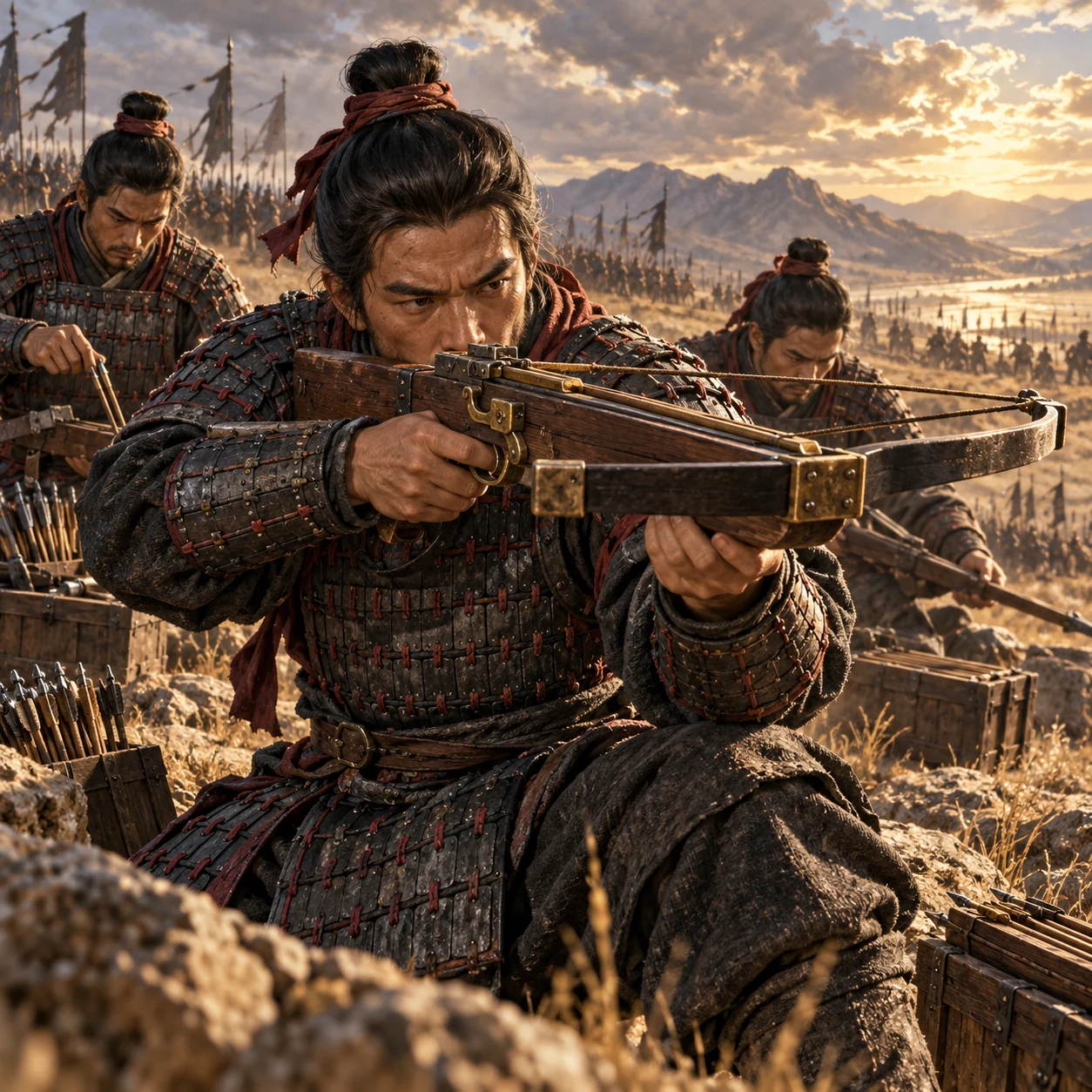
The crossbow’s mechanism — illustrated interpretation

The crossbow’s mechanism

Early Chinese crossbows depended on accurately made bronze trigger parts. The game uses their identity to create tactical matchups; it does not simulate bolt trajectories or firing range.

Historical source ↗
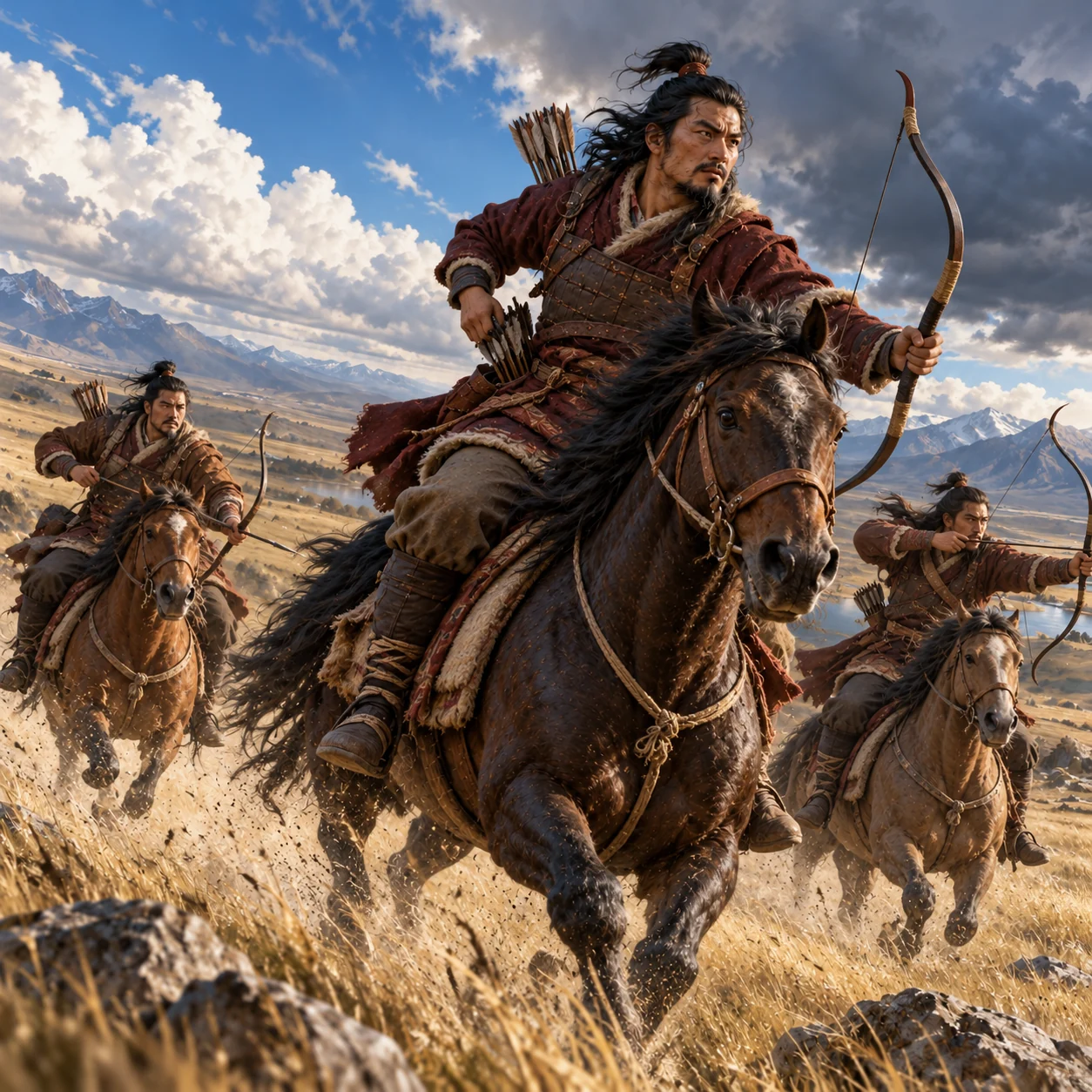
Riding before stirrups — illustrated interpretation

Riding before stirrups

Mounted warfare in this setting belongs to a world before later paired stirrups. Our Zhao imagery emphasises the bow and practical riding dress, not medieval armoured-knight equipment.

Historical source ↗
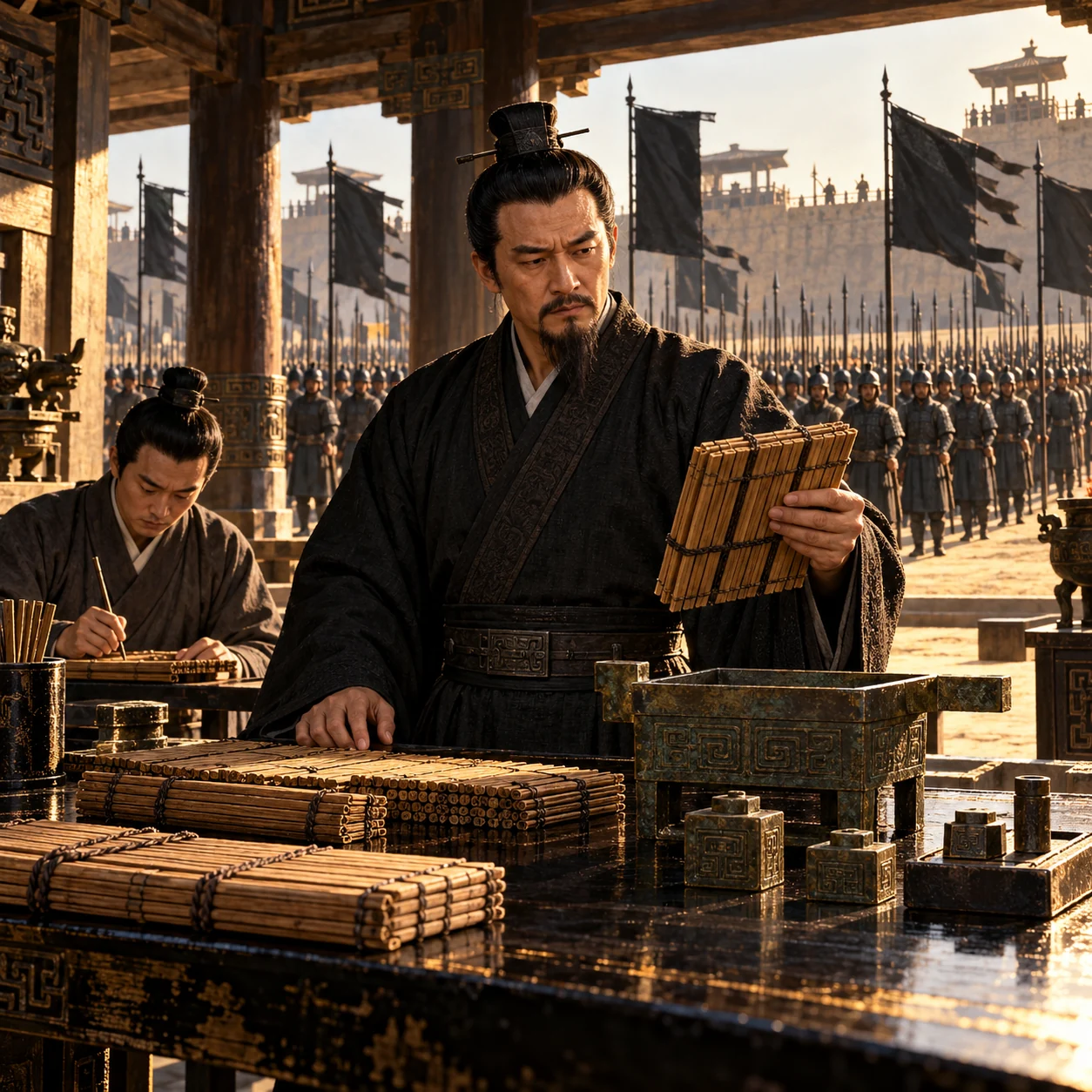
The state behind the army — illustrated interpretation

The state behind the army

Shang Yang’s programme concerned laws and the concentration of resources, not merely a general’s clever manoeuvre. A reform card allows the game to acknowledge the institutions behind military power.

Historical source ↗
Illustrations reconstruct a historical world; card powers translate its themes into a modern game. Qin black and Zhao red are this deck’s visual identities. Portraits, banners and equipment are artistic interpretations, not museum-certified reconstructions.